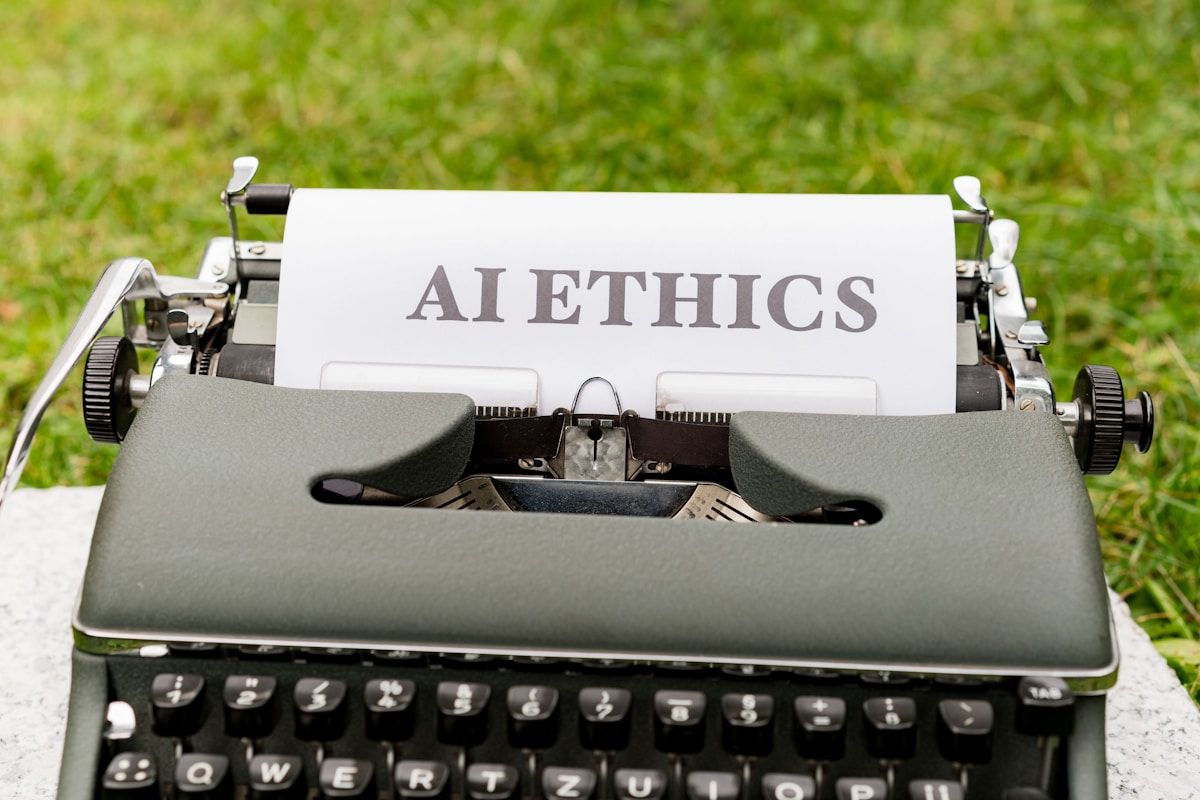
Why AI Monitoring Has Become an Ethical Flashpoint
When a compliance officer at a financial services firm recently discovered that employees had been pasting client account summaries into a consumer-grade AI chatbot, the organization faced two simultaneous crises: a potential regulatory exposure under data protection rules, and a workforce that felt blindsided when management introduced monitoring controls in response. The episode illustrates a tension that enterprise security teams are increasingly forced to navigate — the need to govern AI tool usage runs headlong into deeply felt employee expectations about autonomy and privacy at work.
AI monitoring sits at an uncomfortable intersection of corporate risk management and personal ethics. Employees who use tools like ChatGPT, Copilot, or Gemini during the workday often perceive these as personal productivity aids, not fundamentally different from a browser or a calculator. When organizations install oversight mechanisms without context or communication, the reaction is predictably negative — mistrust, reduced morale, and sometimes deliberate circumvention of controls.
Yet the stakes for not monitoring are equally high. Data leakage through AI prompts, shadow AI adoption across unvetted tools, and compliance gaps that can trigger regulatory penalties are not hypothetical. They are happening now, across industries, at scale. The question is not whether enterprises should govern AI usage — the answer to that is increasingly settled. The real question is how to do it in a way that respects employees as professionals while fulfilling legitimate oversight obligations.
The Real Risks of Unmonitored AI Usage at Work
Before addressing the ethical framework, it is worth grounding the conversation in concrete risk. A 2024 survey by Cyberhaven found that workers paste sensitive data into AI tools at significant rates, including source code, internal financial data, personally identifiable information, and customer records. In regulated industries — healthcare, financial services, legal, defense — the downstream consequences of this behavior can include HIPAA violations, SOC 2 audit failures, breach of client confidentiality obligations, and export control infractions.
Shadow AI is the enterprise equivalent of shadow IT, but with a compressed risk timeline. When an employee installs an unapproved browser extension that routes queries through a third-party AI API, the data handling practices of that vendor are entirely unknown to the organization's security team. Contracts providing data processing terms, retention limits, and model training opt-outs simply do not exist for tools onboarded without IT review.
There is also an accountability dimension that goes beyond data. When AI tools produce outputs that influence business decisions — draft contracts, financial analyses, customer communications — and no audit trail exists for which tools were used, by whom, and in what context, organizations cannot reconstruct the decision-making chain when things go wrong. Governance, in this sense, is not about control for its own sake. It is about maintaining the institutional accountability that boards, regulators, and clients increasingly expect.
Where Surveillance Ends and Governance Begins
The ethical fault line in AI monitoring is not whether oversight happens — it is what, exactly, is being observed. This distinction matters enormously both ethically and legally. Surveillance, in the traditional workplace sense, connotes the capture of individual behavior at a granular, personal level: keystrokes, screen recordings, the specific content of messages and documents. Governance, by contrast, focuses on systemic behavior — patterns, categories, and risk signals at an organizational level rather than individual surveillance.
Capturing the raw content of AI prompts is where most ethical objections rightfully concentrate. An employee who asks an AI tool to help draft a resignation letter, process a personal medical question during a lunch break, or work through a sensitive interpersonal situation has a reasonable expectation that this content is private. Monitoring solutions that log raw prompt content create chilling effects on legitimate use and expose organizations to significant legal risk under privacy regulations in the EU, California, and elsewhere.
The governance approach — tracking which AI tools are accessed, classifying the nature of usage at a categorical level, identifying which departments are using unapproved tools — provides the compliance visibility that security teams need without requiring access to the actual contents of individual interactions. This is not a semantic distinction. It is the architectural line between a monitoring program employees can ethically accept and one that will generate legal challenges, union grievances, and attrition.
Building a Transparent AI Monitoring Policy Employees Can Accept
Transparency is the foundational requirement of any ethical AI monitoring program. Employees must know that monitoring exists, what is being captured, who has access to that data, and how it will be used. Policies that operate in the background without disclosure do not merely create ethical problems — they can constitute unlawful interception under wiretapping statutes in several jurisdictions, including many U.S. states and across the EU under GDPR's lawful basis requirements.
A well-constructed AI usage policy should define, in plain language, the categories of AI tools that are sanctioned, the process for requesting approval of new tools, the types of usage data the organization collects, and the consequences of policy violations. It should also explain what the monitoring does not capture — specifically, that prompt content is not logged and that monitoring is organizational rather than individual. This kind of specificity reduces anxiety and builds the credibility necessary for employees to engage with the policy genuinely rather than trying to route around it.
Legal and HR counsel should be involved in policy drafting, particularly in multinational organizations where employee privacy protections vary significantly. Works council consultations are mandatory in Germany, France, and the Netherlands before deploying employee monitoring tools. In the UK, the ICO has published guidance on workplace monitoring that requires employers to conduct a data protection impact assessment. Getting these processes right at the outset is far less costly than defending a complaint after deployment.
Privacy-Preserving Governance: What Good Looks Like
Privacy-preserving AI governance is not a theoretical ideal — it is an achievable architectural standard that separates mature programs from reactive ones. The key design principles are: collect at the category level rather than the content level, aggregate data for reporting rather than enabling individual surveillance, and establish clear data retention and access controls that limit who within the organization can see what.
Technically, this means governance tools should classify AI interactions by type — such as code generation, document drafting, data analysis, or customer communication — without storing the underlying prompts or responses. They should surface risk signals, such as the use of an unapproved AI tool that handles data outside approved regions, without identifying which specific employee triggered the alert in routine reporting. Escalation to individual-level data should require a documented process, appropriate authorization, and a specific compliance or security justification.
Role-based access to monitoring dashboards is equally important. A department manager does not need visibility into the AI tool usage patterns of individual employees on a routine basis. A CISO conducting a post-incident investigation has different access needs than a compliance analyst running quarterly reports. Tiering access by role and justification reinforces the message that the governance program exists to manage organizational risk — not to build individual performance dossiers.
How to Roll Out AI Oversight Without Destroying Morale
Implementation sequence and communication strategy determine whether an AI governance rollout builds organizational trust or depletes it. Organizations that deploy monitoring tools quietly, without advance communication, and then use the resulting data punitively will discover that the damage to employee relations outweighs any compliance benefit. The better approach treats deployment as a change management exercise, not a security operation.
Start with internal champions. Identify respected voices in engineering, legal, finance, and operations who understand why governance matters and can communicate it credibly to their peers. Have them involved in policy review before launch, not just as rubber stamps but as genuine contributors who can raise blind spots. When employees see that the policy was shaped by people like them — not just handed down from security — the reception is materially different.
Pair the monitoring rollout with an AI enablement initiative. If governance is introduced alongside a curated set of approved, enterprise-grade AI tools that employees can use confidently, the message shifts from restriction to empowerment. Governance becomes the mechanism that allows the organization to say yes to AI adoption rather than the mechanism that says no. Frame the program as protecting employees from inadvertent compliance violations, not policing them for bad intent. Most employees who paste sensitive data into AI tools do not realize they are creating a compliance problem — governance, properly framed, is there to help them navigate the landscape safely.
Finding the Balance That Actually Works
The tension between oversight and trust in AI monitoring is real, but it is not irresolvable. Organizations that approach governance as a binary choice — either full surveillance or no monitoring at all — will find themselves perpetually on the wrong side of either the compliance or the culture problem. The path through that tension runs along a set of clear principles: monitor at the right level of abstraction, communicate transparently and specifically, involve employees in policy development, and design systems that protect privacy by architecture rather than by policy alone.
CISOs and compliance officers who have successfully deployed AI governance programs consistently report the same insight: employees do not object to being governed. They object to being treated as suspects. When monitoring is explained honestly, scoped appropriately, and implemented with demonstrable respect for privacy, the majority of employees not only accept it — they actively appreciate having clarity about what is expected of them and what protections exist.
The organizations that will navigate the AI era with both security integrity and workforce trust intact are those building governance programs today that treat those two objectives as complementary rather than competing. Ethical AI monitoring is not about limiting what employees can do. It is about creating the organizational conditions under which AI adoption can scale safely, accountably, and sustainably. If you are ready to build that kind of program, explore how Zelkir's privacy-preserving approach to AI governance can give your security and compliance teams the visibility they need — and Try Zelkir for FREE today and get full AI visibility in under 15 minutes.
Zelkir gives enterprise security and compliance teams complete AI usage visibility without capturing a single line of prompt content — protecting both your organization and your employees' trust. Try Zelkir for FREE today and get full AI visibility in under 15 minutes.